This dry brine roast chicken uses an overnight salt brine to season the chicken and help dry the surface before roasting. The chicken starts at a higher oven temperature to encourage browning, then finishes roasting until it reaches a safe internal temperature. After resting, the chicken has crisp skin with tender, flavorful meat.
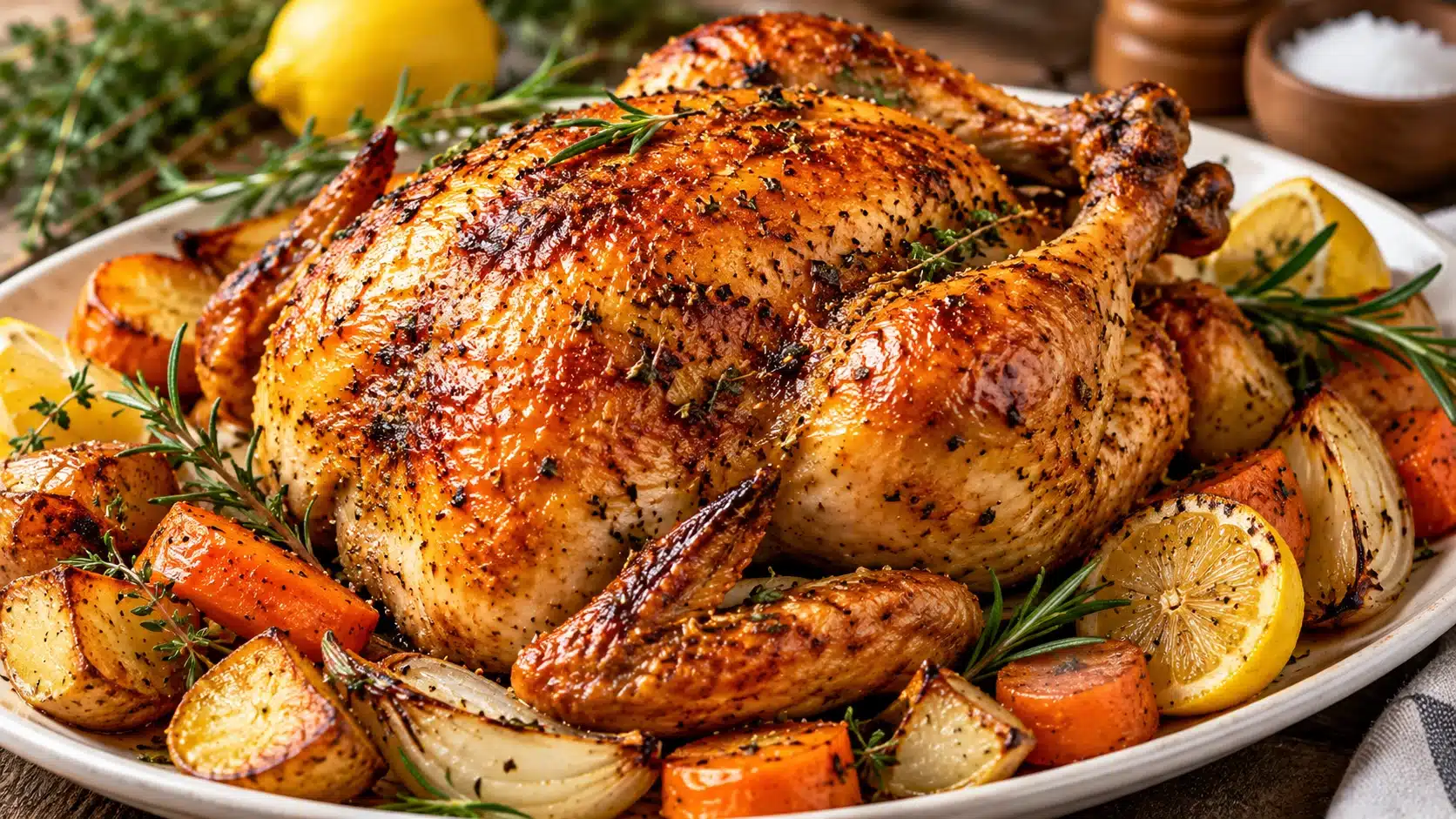
Dry Brine Roast Chicken (Crispy Skin & Juicy Meat)
Equipment
- Roasting pan
- Wire Rack
- Instant-read thermometer
- Cutting board
- Carving knife
- Paper towels
Ingredients
- 1 whole chicken 3–5 lb / 1.4–2.3 kg, preferably about 4 lb
- 12 g kosher salt approximately 1 tbsp Morton or 1 tbsp plus 2 tsp Diamond Crystal
- 1 tsp black pepper
- 1 tsp sweet paprika
- 2 tbsp olive oil
- 4 cloves garlic crushed
- 1 lemon quartered
- A few sprigs fresh thyme or rosemary
- 2 onions roughly chopped
- 3 carrots cut into large chunks
- 3 –4 potatoes halved
- Fresh thyme or rosemary for serving
- Lemon wedges for serving
Instructions
- Step 1 — Dry Brine (24 hours ahead):The day before cooking, pat the chicken completely dry with paper towels — every inch, inside and out. Mix the salt, pepper, and paprika, then rub the mixture all over the outside and inside the cavity. Place the chicken on a rack set over a tray and leave it uncovered in the fridge overnight.
- Step 2 — Prep before roasting:Take the chicken out of the fridge 30 minutes before roasting. Stuff the cavity loosely with the garlic, lemon, and herbs. Brush the skin all over with olive oil.
- Step 3 — High-heat start:Preheat your oven to 425°F (218°C). Place the vegetables in the bottom of your roasting pan and set the chicken on top. Roast for 15 minutes until the skin starts to turn golden.
- Step 4 — Lower the temperature:Without opening the oven door, reduce the heat to 375°F (190°C) and continue roasting. Use the chart below for timing.
- Step 5 — Check for doneness:Insert an instant-read thermometer into the thickest part of the thigh, avoiding the bone. The safe minimum internal temperature is 165°F (74°C).
- Step 6 — Rest (non-negotiable):Transfer the chicken to a cutting board and tent loosely with foil. Rest for 20 minutes. This allows juices to redistribute.
Step 7 — Carve and Serve:
Carve the chicken and serve with the roasted vegetables and pan juices. Check that the vegetables are fully cooked before serving.- Roast Chicken Timing Chart3 lb (1.4 kg): About 60–65 minutes total.4 lb (1.8 kg): About 75–85 minutes total.5 lb (2.3 kg): About 90–100 minutes total.Times include the initial 15 minutes at 425°F (218°C), followed by roasting at 375°F (190°C).Cooking times are estimates. Always check the internal temperature with a food thermometer before serving.
What to Expect
- Skin: Golden and crisp
- Meat: Tender and juicy
- Flavor: Savory with herbs
- Texture: Crisp skin with moist meat
Why This Method Works
- Dry brining: Salt seasons the chicken while the uncovered refrigerator rest helps dry the skin.
- High-heat start: Encourages browning at the beginning of roasting.
- Lower-temperature finish: Allows the chicken to continue cooking until it reaches a safe internal temperature.
- Resting: Gives the chicken time to rest before carving.
- Simple ingredients: The method requires only a few basic seasonings and herbs.
According to USDA food safety guidelines, the safe minimum internal temperature for whole poultry is 165°F (74°C).
Dry Brine Roast Chicken Cooking Times
Cooking times are estimates and can vary depending on the size of the chicken and your oven. Always use a food thermometer to check doneness. Whole chicken should reach 165°F (74°C) in the innermost part of the thigh and wing and the thickest part of the breast before serving.
| Chicken Weight | Time at 375°F | Total Oven Time |
|---|---|---|
| 3 lb / 1.4 kg | 45-50 min | ~60-65 min |
| 4 lb / 1.8 kg | 60-70 min | ~75-85 min |
| 5 lb / 2.3 kg | 75-85 min | ~90-100 min |
Total oven times include the initial 15 minutes at 425°F (218°C), followed by roasting at 375°F (190°C). Cooking times are approximate; always confirm doneness with a food thermometer.
For a deep dive into the science of roast chicken, Serious Eats explains why dry skin and high heat are essential for that perfect crispy crust.
Tips for Dry Brine Roast Chicken
| Tip | Why It Helps |
|---|---|
| Pat the chicken dry | Removes surface moisture before dry brining |
| Refrigerate uncovered | Helps the surface dry before roasting |
| Use a wire rack | Allows hot air to circulate around more of the chicken |
| Avoid opening the oven frequently | Opening the oven releases heat and can slow cooking |
| Use a meat thermometer | Helps you check doneness without relying only on cooking time |
Troubleshooting
| Problem | Possible Cause | What to Do |
|---|---|---|
| Skin isn’t crispy | Too much surface moisture | Pat the chicken dry and refrigerate it uncovered during the dry brine |
| Breast cooks faster than thighs | Different parts cook at different rates | Check the temperature in both the breast and thigh |
| Chicken isn’t browning | Oven not fully preheated | Make sure the oven reaches the required temperature before roasting |
| Skin browns too quickly | Oven runs hot | Loosely cover the browned areas with foil while the chicken finishes cooking |
Dry Brine Roast Chicken Variations
- Lemon Herb: Add lemon zest, thyme, and rosemary.
- Garlic Herb: Add garlic, thyme, and rosemary.
- Southwest: Add cumin, chili powder, oregano, and lime zest.
- Spatchcock Chicken: Remove the backbone and flatten the chicken before roasting. Cooking time will differ, so use a meat thermometer to determine doneness.
Storage & Reheating
- Fridge: Store leftover cooked chicken in an airtight container in the refrigerator for 3–4 days. Refrigerate within 2 hours of cooking.
- Reheat: Place leftover chicken in an oven-safe dish with a splash of broth. Cover loosely with foil and reheat at 325°F (165°C) until the center reaches 165°F (74°C).
- Freezer: Freeze cooked chicken in airtight, freezer-safe containers for up to 3 months for best quality.
- Homemade Stock: Use the leftover chicken bones with carrots, onions, celery, herbs, and water to prepare homemade chicken stock.
Frequently Asked Questions
How long do you roast a chicken at 375°F?
Cooking time depends on the size of the chicken and your oven. Use the roasting times in the recipe as estimates and check the chicken with a meat thermometer rather than relying only on time.
What temperature should roast chicken be when done?
Whole chicken should reach a safe internal temperature of 165°F (74°C). Check the innermost part of the thigh and wing and the thickest part of the breast with a food thermometer.
Why isn’t my chicken skin getting crispy?
Excess surface moisture can prevent the skin from crisping well. Pat the chicken dry before seasoning and refrigerate it uncovered during the dry-brining period. Also make sure the oven is fully preheated before roasting.
Can I stuff a dry brine roast chicken?
This recipe is designed for an unstuffed chicken. For easier and more predictable roasting, use aromatics such as lemon, garlic, or herbs in the cavity rather than a bread-based stuffing.
What is the difference between a dry brine and a wet brine?
A dry brine uses salt directly on the chicken without soaking it in water. During the refrigerator rest, the salt seasons the chicken while the uncovered surface dries, which can help the skin brown and crisp during roasting.
You Might Also Like These Chicken Recipes
One-Pan Lemon Herb Chicken – Quick and fresh!
Marry Me Chicken – Creamy and irresistible!
Boneless Chicken Thighs – Quick weeknight dinner!
30-Minute Dinner Guide – Fast meal ideas!
🍽️ Loved This Recipe? Here’s How You Can Help!
📸 SHOW US YOUR ROAST!
Tag @TastyDinnerRecipes on Instagram – we might feature you!
📌 SAVE FOR LATER
Pin this recipe to your ‘Chicken’ board ↓
✉️ GET WEEKLY RECIPES
Subscribe for free
💬 LEAVE A COMMENT
Have you tried this dry brine roast chicken? What’s your favorite herb combination? Tell us below! 🍗