Experience the magic of Thai street food at home with this irresistible twist on a classic. Our Coconut Sticky Rice (Khao Niew) with Roasted Pineapple and Lime is a quick and easy vegan dessert that delivers an explosion of tropical flavor in under 30 minutes. While traditional khao niew mamuang (mango sticky rice) reigns supreme, this version swaps in caramelized roasted pineapple for a vibrant, budget-friendly, and year-round alternative. The result? A perfect harmony of creamy, sweet coconut rice, tangy lime, and the deep, smoky sweetness of broiled pineapple. It’s a gluten-free, dairy-free treat that’s impressive enough for a dinner party yet simple enough for a weeknight craving. Developed and tested over dozens of iterations in our kitchen, this easy sticky rice recipe has become a staff favorite for a reason.
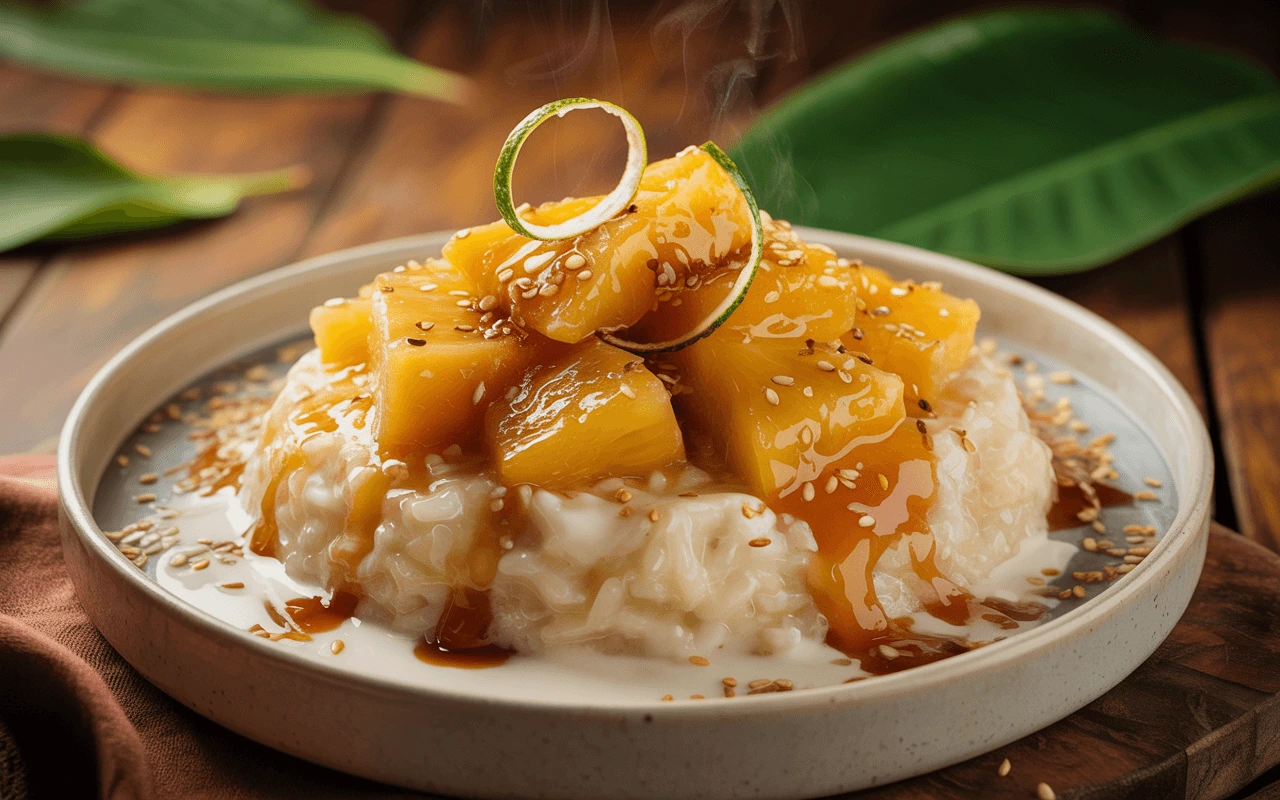
Coconut Sticky Rice with Roasted Pineapple and Lime
Equipment
- 1 Steamer basket Cheesecloth or banana leaf
- 1 Medium saucepan Coconut sauce
- 1 Rimmed baking sheet Foil-lined roasting
- 1 Broiler pan OR oven rack high position
- 1 Fine mesh strainer Rinse glutinous rice
- 1 Microplane Lime zest
- 1 Small bowl Soaking rice
Ingredients
- 1½ cups | glutinous rice
- 13.5 oz | coconut milk
- ⅓ cup + 3 tbsp | sugar
- 1 | pineapple 2lb
- 2 tbsp | coconut oil
- 1 | lime
Instructions
- Rinse glutinous rice until water clear. Soak 20min (or overnight fridge). Drain.
- Steam rice: Line steamer cheesecloth. Spread even, steam 15-20min translucent.
- Coconut sauce: Heat 1 cup coconut milk + ⅓ cup sugar + salt. Stir dissolve. Reserve ¼ cup.
- Infuse rice: Pour hot coconut sauce over steamed rice. Cover 10min absorb.
- Roast pineapple: Broil ½” chunks + coconut oil + brown sugar 8-10min caramelized.
- Assemble: Rice bowl + pineapple + lime zest/juice + sesame seeds + coconut drizzle.
Notes
✨ Why Coconut Sticky Rice Works
- The Broiler is Your Secret Weapon: Roasting the pineapple under high heat caramelizes its natural sugars in minutes, creating a deep, complex flavor that rivals grilling—no special equipment needed.
- The Soak-Steam-Infuse Method: Soaking the glutinous rice guarantees perfect tenderness, steaming ensures the right sticky texture, and infusing it hot with the coconut sauce allows maximum flavor absorption without sogginess.
- The Balance of Textures & Flavors: This recipe masters the Thai principle of balancing tastes: the creamy sweetness of the coconut rice, the smoky tartness of the roasted pineapple, and the bright, fresh zing of lime create an unforgettable dessert experience.
- Built-in Make-Ahead Flexibility: Every component can be prepared in advance, making this the ideal stress-free dessert for entertaining or meal prep.
What is Glutinous Rice?
Glutinous rice (also called sweet or sticky rice) is a short-grain variety from Southeast Asia with low amylose, creating its signature chewiness when steamed. It’s the essential foundation for any authentic Thai dessert like this one. Find it in Asian markets or online; do not substitute regular rice, as the texture will not be correct.
Pro Tips for Perfection
- Make Ahead: Prepare both the rice and pineapple up to 1 day ahead. Reheat the rice gently with a splash of coconut milk to restore creaminess.
- Substitutions: No pineapple? Use mango or peaches for a different tropical dessert. For an extra layer of authentic Thai flavor, add a drop of pandan extract to the coconut sauce.
- Storage: Refrigerate leftovers in an airtight container for up to 3 days. Re-steam the rice briefly for the best texture.
- Scaling: This recipe doubles easily for crowds, making it ideal for potlucks and parties.
- For Maximum Flavor: Letting the rice soak overnight in the fridge allows it to develop a deeper, more nuanced taste.
Coconut Sticky Rice Serving & Pairing Suggestions
Take your dessert spread to the next level. For an authentic Thai experience, serve this sticky rice alongside a pot of jasmine tea or a glass of iced Thai tea. It also makes a stunning finale to a dinner party menu featuring lighter dishes like a lemongrass soup or a green papaya salad. For a casual summer BBQ, it’s a refreshing and unexpected alternative to heavier cakes or pies.
⚠️ Common Mistakes to Avoid
- Skipping the Rice Rinse: The starch on unrinsed glutinous rice can make it gummy. Rinse until the water runs clear for distinct, chewy grains.
- Boiling the Coconut Sauce: Heating the coconut milk too aggressively can cause it to separate or become oily. Warm it gently just until the sugar dissolves.
- Overcrowding the Pan for Roasting: Spread the pineapple in a single layer. If the chunks are piled up, they’ll steam instead of caramelize.
- Using Underripe Pineapple: A ripe, fragrant pineapple is key. It should yield slightly to pressure and smell sweet at the base.
Coconut Sticky Rice FAQs
Can I use regular rice instead of glutinous rice?
No, for authentic sticky rice texture, glutinous rice is non-negotiable. Its unique starch composition is what gives the dessert its characteristic chew and ability to hold the coconut sauce.
How do I store leftover sticky rice?
Store in an airtight container in the refrigerator for up to 3 days. The best way to reheat is to re-steam it for a few minutes or sprinkle with water and microwave covered. Add a little extra coconut milk to refresh the creaminess.
Can I make this without a steamer?
Yes! A rice cooker with a “sticky rice” setting works perfectly. As a last resort, you can use the “pot-in-pot” method: place the soaked rice in a heatproof bowl on a trivet in a pot with a little simmering water, cover, and steam.
Is this dessert really vegan and gluten-free?
Absolutely. All ingredients—from the coconut milk to the sugar—are plant-based and gluten-free, making it a fantastic inclusive dessert option.
Nutrition Information (Per Serving)
Calories: 420 | Total Carbohydrates: 72g | Dietary Fiber: 3g | Total Fat: 14g | Protein: 5g
(Note: Nutritional estimates are based on ingredient brands used and may vary.)
Conclusion
We hope this easy, tropical dessert brings a vibrant taste of Thailand to your kitchen. The contrast of the creamy coconut rice, zesty lime, and smoky-sweet roasted pineapple is truly unforgettable. Don’t forget to rate the recipe below and share your beautiful creations with us online—we love seeing your vegan Thai dessert masterpieces!
We Want to See Your Creation!
Did you try this Coconut Sticky Rice? Your feedback makes our recipes better! Leave a 5-star rating below and tell us how it went in the comments. Snap a photo and tag @tastydinnerrecipes on Instagram—we love featuring our community’s kitchen wins! Hungry for more? Explore our entire collection of > Dinners < for your next meal.
Inspired by how easy this was? Discover more weeknight winners in our collection of 30-Minute Dinner Recipes. From sizzling stir-fries to one-pan wonders, we’ve got your busy evenings covered
Looking for your next delicious dinner idea? Explore hundreds of tested & approved main dishes on TastyDinnerRecipes.com – where easy meets flavorful every night of the week!