French Bread Recipe – Learn how to make authentic French bread at home using traditional techniques passed down through generations of French master bakers. This comprehensive guide will help you achieve the perfect crusty exterior and soft, airy interior that makes French bread world-famous.
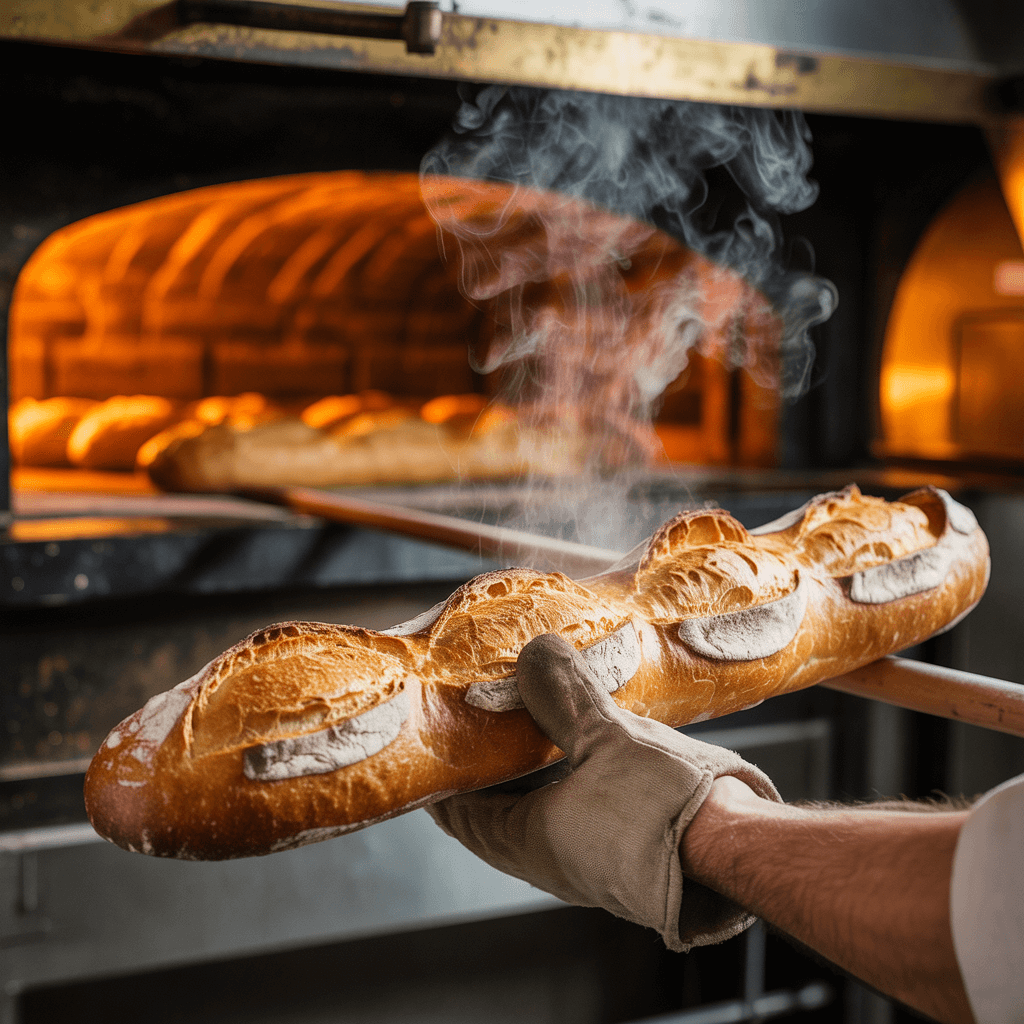
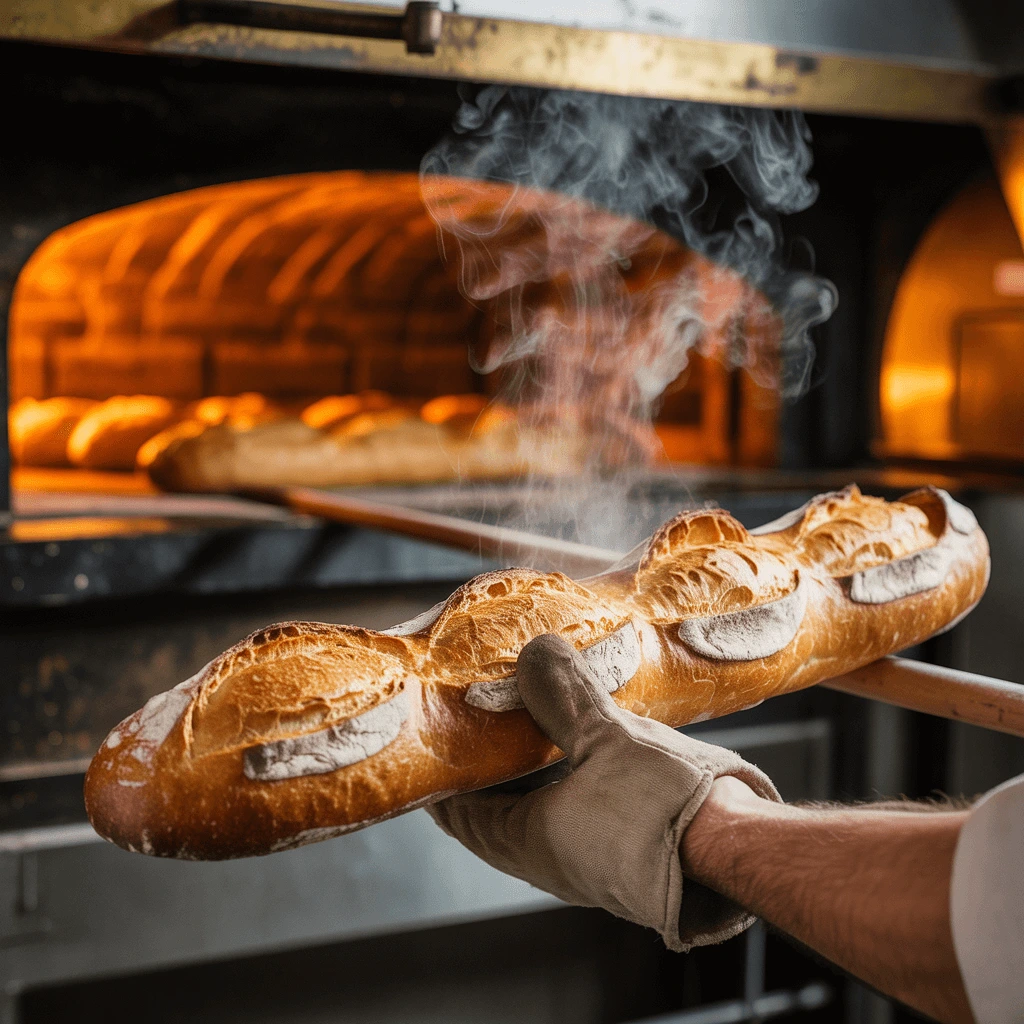
Authentic French Bread (Crusty, Chewy, Perfect)
Equipment
- Digital kitchen scale
- Stand mixer with dough hook
- Dutch oven or oven-safe pot with lid
- Razor blade or lame
- Proofing basket or bowl
- Baking stone or baking sheet
- Spray bottle
Ingredients
- 500 g bread flour 12-13% protein content
- 375 ml filtered water at room temperature
- 10 g sea salt
- 4 g active dry yeast or 8g fresh yeast
- Rice flour for dusting optional
Instructions
- Autolyse & Initial Mix (30 minutes):
- In a large bowl, combine bread flour and water. Mix until no dry flour remains. Cover and let rest for 30 minutes.
- Add Yeast & Salt:
- Sprinkle yeast and salt over the dough. Mix on low speed for 3 minutes, then medium for 5 minutes. The dough should be slightly sticky but smooth and elastic.
- Bulk Fermentation (2-3 hours):
- Transfer dough to a lightly oiled bowl. Cover and let rise until tripled in size. Perform stretch and folds every 30 minutes for the first 2 hours.
- Shape & Final Proof (1-2 hours):
- Turn dough onto a floured surface. Shape into a boule or baguette. Place in proofing basket dusted with rice flour. Proof until increased by 50% in size.
- Bake (30-35 minutes):
- Preheat oven with Dutch oven to 475°F (245°C) for 1 hour. Turn dough onto parchment paper and score the top. Transfer to Dutch oven, cover, and bake for 20 minutes. Remove lid and bake for 10-15 minutes until deep golden brown. Cool completely on wire rack before slicing.
Why This Authentic French Bread Recipe Works
Traditional Techniques adapted from master bakers Lionel Poilâne and Eric Kayser
Proper Hydration for optimal crust and crumb development
Slow Fermentation develops complex flavors naturally
Steam Baking creates the signature crispy crust
Simple Ingredients let the quality of technique shine through
🎯 Master Baker’s Secrets
The Windowpane Test
Take a small piece of dough and gently stretch it between your fingers. If it forms a thin, translucent membrane without tearing, your gluten development is perfect.
Scoring Techniques
- Baguette: 5-7 diagonal cuts at 45-degree angle
- Boule: Single deep cross or decorative pattern
- Use a razor blade at 30-degree angle for best results
Steam Methods
- Dutch oven (easiest and most effective)
- Ice cubes tossed into preheated pan
- Spray bottle misting oven walls every 5 minutes
Troubleshooting Common Issues
| Problem | Cause | Solution |
|---|---|---|
| Dense crumb | Under-proofing | Extend fermentation time |
| Pale crust | Lack of steam | Use Dutch oven method |
| Flat loaf | Over-proofing | Watch for 50% size increase |
| Tough crust | Baked too long | Reduce uncovered baking time |
| Sticky dough | High humidity | Reduce water by 10-15ml |
Baking Schedule Example
| Time | Activity | Duration |
|---|---|---|
| 9:00 AM | Autolyse | 30 minutes |
| 9:30 AM | Mix & knead | 10 minutes |
| 9:40 AM | Bulk fermentation | 3 hours |
| 12:40 PM | Shape & proof | 1.5 hours |
| 2:10 PM | Bake | 35 minutes |
| 2:45 PM | Cool | 2+ hours |
Temperature Guidelines
Internal doneness: 200-210°F (93-99°C)
Ideal room temp: 70-75°F (21-24°C)
Water temp: 75-80°F (24-27°C)
Oven temp: 475°F (245°C) with lid, 450°F (230°C) without lid
Frequently Asked Questions
Can I use all-purpose flour?
Yes, but reduce water to 350ml (70% hydration) and expect a slightly less chewy texture.
Why is my crust not crispy enough?
Steam during the first 20 minutes of baking is crucial. Ensure your Dutch oven is properly preheated and sealed.
How do I know when it’s properly proofed?
The dough should hold a slight indentation when gently pressed with a finger and feel airy and light.
Can I make this without a Dutch oven?
Yes! Use a baking stone and create steam by placing a pan of ice cubes on the oven floor.
How long does French bread stay fresh?
Best consumed within 24 hours. Store in paper bag at room temperature – never refrigerate.
🥖 Variations & Regional Styles
Parisian Baguette
- Longer, thinner shape (2-2.5 feet)
- 5-7 diagonal scores
- Crispier crust, more open crumb
Pain de Campagne
- Round country loaf
- 10-20% whole wheat flour
- Longer fermentation (up to 24 hours)
Fougasse
- Leaf-shaped Provençal bread
- Olive oil and herbs in dough
- Baked flat with decorative cuts
📸 Visual Doneness Indicators
- Crust: Deep golden brown with some blisters
- Sound: Hollow when tapped on bottom
- Color: Even browning across entire surface
- Expansion: 30-40% oven spring during baking
🍽️ Serving Suggestions
- Fresh: With high-quality butter and sea salt
- Breakfast: Toasted with jam or Nutella
- Lunch: For sandwiches or alongside soup
- Dinner: As accompaniment to cheese boards
🌟 Pro Tips for Success
- Weigh ingredients – baking is a science
- Be patient – don’t rush fermentation
- Practice scoring – it affects oven spring
- Invest in thermometer – know your dough temp
- Keep a baking journal – track what works
Ready to taste your homemade French bread masterpiece? The crisp crackle of the crust and soft, airy interior will transport you straight to a Parisian boulangerie. Share your baking results and tag us for expert feedback!
Looking for variations? Explore this Classic French Bread Recipe for additional techniques.