Tender chicken thighs simmer with fresh apples, onions, thyme, and a savory apple cider–Dijon sauce in one skillet. This apple cider chicken skillet is a fall dinner you can serve straight from the pan, with enough sauce to spoon over mashed potatoes.
The recipe uses nonalcoholic apple cider, the drink sold near apple juice in many North American stores. Apple cider vinegar is a different ingredient and cannot replace the cider in the sauce. Choose crisp apples that hold their shape while the chicken cooks.
At a glance: 15 minutes prep · about 40 minutes cooking · about 55 minutes total · 4 servings · one skillet. Cook the chicken to 165°F (74°C); thickness and pan heat can change the cooking time.
What Makes This Apple Cider Chicken Skillet Work?
Searing the chicken skin-side down builds color and leaves browned bits in the pan. Onion and apple wedges cook in those drippings, then apple cider and broth lift the browned bits into a pan sauce. Dijon mustard adds tang without turning the dish into a sweet dessert sauce.
For the best texture, keep the apple wedges fairly thick—about 1/2 inch—so they soften without disappearing. Leave the skin of the chicken above the simmering liquid when you return it to the pan.
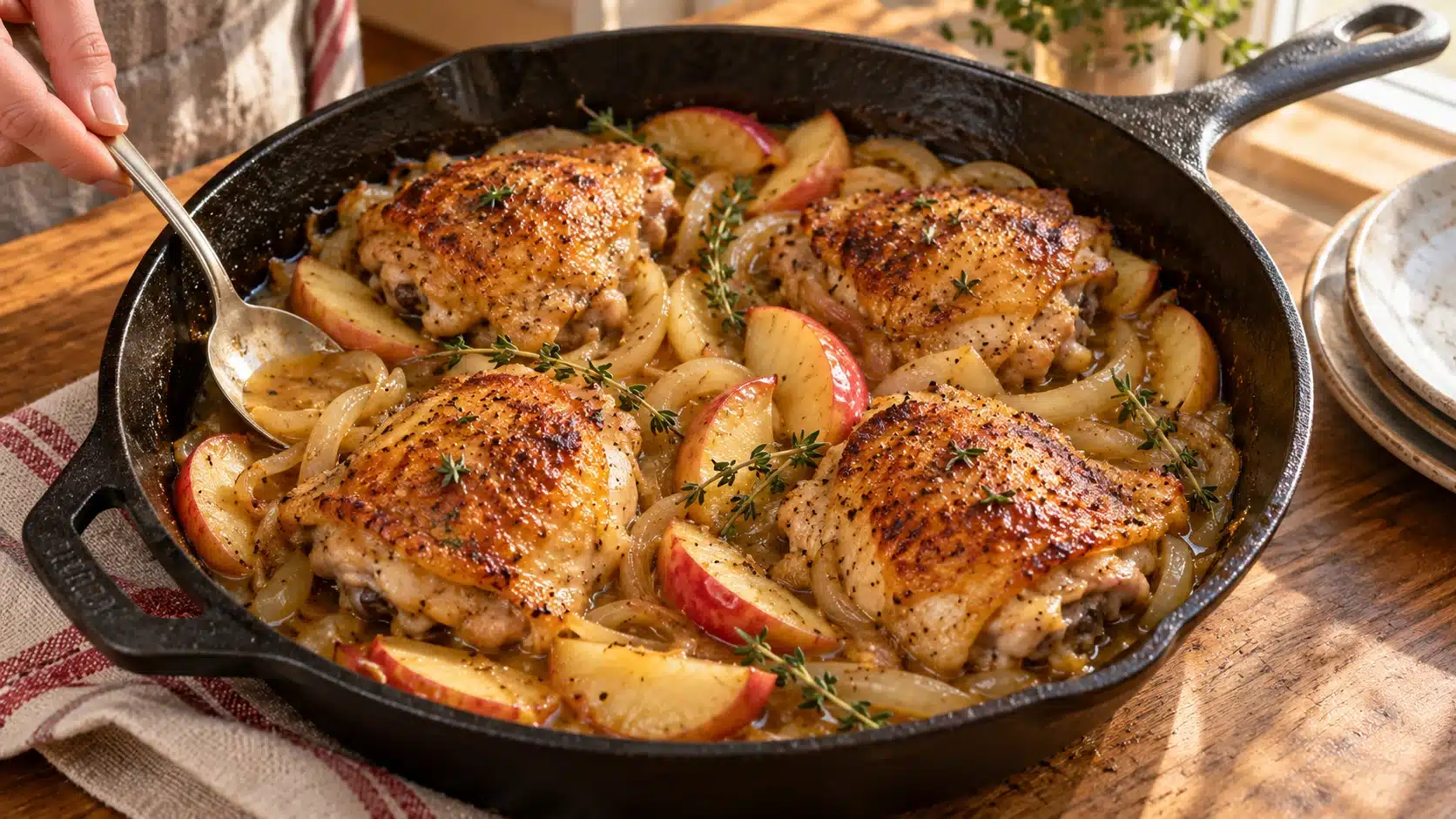
Apple Cider Chicken Skillet with Apples and Dijon
Ingredients
- 4 bone-in skin-on chicken thighs, about 1 3/4 to 2 pounds total
- ¾ teaspoon kosher salt divided
- ¼ teaspoon freshly ground black pepper
- 1 tablespoon olive oil
- 1 medium yellow onion thinly sliced
- 2 medium crisp apples cored and cut into 1/2-inch wedges
- 2 garlic cloves minced
- ¾ cup nonalcoholic apple cider not apple cider vinegar
- ½ cup low-sodium chicken broth
- 1 tablespoon Dijon mustard
- 3 sprigs fresh thyme
- 1 teaspoon apple cider vinegar optional, only if the sauce tastes too sweet
Instructions
- Pat the chicken thighs dry. Season on both sides with 1/2 teaspoon of the salt and the black pepper.
- Heat the olive oil in a large 12-inch skillet over medium-high heat. Set the chicken in the pan skin-side down. Sear for 7–8 minutes without moving it much, until the skin is golden. Flip and cook for 2 minutes. Transfer to a plate; the chicken is not fully cooked yet.
- Reduce heat to medium. Add the sliced onion and apple wedges to the same skillet. Cook for 4–5 minutes, stirring gently, until the onion softens and the apples begin to color. Stir in the garlic for 30 seconds.
- Pour in the apple cider and broth, scraping up the browned bits. Stir in the Dijon and add the thyme. Bring to a gentle simmer. Return the chicken and any juices to the skillet, skin-side up, keeping the skin mostly above the liquid.
- Cover loosely and simmer over medium-low heat for 15–20 minutes, or until a thermometer in the thickest part of each thigh, away from bone, reads 165°F (74°C). Remove the lid for the last few minutes if you want the sauce to reduce further. Cooking time varies with thigh size.
- Transfer the cooked chicken to a plate if the sauce still needs thickening. Simmer the sauce uncovered for 2–4 minutes, then taste. Add the remaining 1/4 teaspoon salt if needed. If the sauce tastes too sweet, stir in a little of the optional apple cider vinegar, up to 1 teaspoon. Return the chicken to the skillet and spoon sauce around it. Serve with apples, onion, and thyme.
Which Apple Cider and Apples Should You Use?
Use fresh, nonalcoholic apple cider. Unfiltered cider has a fuller apple flavor, but a shelf-stable nonalcoholic cider also works. Unsweetened apple juice can work in a pinch; it will give a lighter sauce. Do not pour in 3/4 cup apple cider vinegar—the sauce would be far too acidic.
Honeycrisp, Pink Lady, Braeburn, or Granny Smith apples hold up well in a skillet. You can combine one sweeter apple with one tart apple. There is no need to peel them unless you prefer a softer finish.
Tips for Juicy Chicken and a Balanced Sauce
- Dry the chicken first. Pat the thighs with paper towels before seasoning so the skin browns instead of steaming.
- Give the chicken space. Sear in batches if your skillet cannot hold four thighs without crowding.
- Keep the simmer gentle. A hard boil can overcook the outside before the thickest part reaches temperature.
- Use a thermometer. The USDA safe-temperature chart gives 165°F (74°C) as the minimum internal temperature for chicken. Check the thickest part without touching the bone.
- Taste before adding more acid. Cider and Dijon vary. If the sauce tastes too sweet after reducing, add up to 1 teaspoon of apple cider vinegar at the end, a little at a time.
What to Serve with Apple Cider Chicken
Spoon the apple and onion sauce over caramelized onion mashed potatoes or serve the chicken with roasted vegetables and crusty bread. For another chicken dinner, try our lemon herb chicken and vegetables. Finish the meal with easy apple crisp if you want an apple dessert.
Looking for more meal ideas? Browse the Healthy Recipes collection at Healthy Well Recipes.
Variations and Substitutions
Boneless, skinless thighs: Use about 1 1/2 pounds of boneless thighs. Sear for about 4–5 minutes per side, then simmer briefly in the sauce until the thickest piece reaches 165°F (74°C). They will cook faster, so check early.
Chicken breasts: Use similarly sized breasts and begin checking the temperature earlier. Remove each piece as soon as it reaches 165°F (74°C) to avoid dry meat.
No fresh thyme: Use about 1/2 teaspoon dried thyme in the sauce. Fresh thyme gives a more visible garnish, but either works.
No cast-iron skillet: Use a large, heavy stainless-steel or other oven-safe skillet on the stovetop. This recipe does not require an oven.
How to Store and Reheat Leftovers
Refrigerate the chicken and sauce in shallow, covered containers within 2 hours. Eat refrigerated leftovers within 3–4 days, following the USDA chicken storage guidance. Reheat chicken to 165°F (74°C), adding a splash of broth if the sauce has thickened. The apples will be softer after reheating.
You can freeze the cooked chicken with sauce, though the apple wedges will soften when thawed. Thaw in the refrigerator before reheating.
Frequently Asked Questions
Is apple cider the same as apple cider vinegar?
No. This recipe needs 3/4 cup of nonalcoholic apple cider, a drink similar to apple juice. The optional teaspoon of apple cider vinegar at the end is only for adjusting the sauce’s acidity.
Can I use apple juice instead of cider?
Yes. Use unsweetened apple juice in the same amount. The sauce may taste lighter, so taste after reducing and adjust with a small amount of vinegar only if needed.
Do I have to peel the apples?
No. The peels help the wedges keep their shape. Peel them if you prefer a softer texture.
How do I keep the chicken skin crisp?
Sear the skin well and return the thighs to the skillet skin-side up, with the liquid mostly below the skin. The covered simmer will soften some crispness; for the crispest finish, leave the pan uncovered for the final few minutes while checking the chicken temperature.
Can I make apple cider chicken ahead?
Yes. Refrigerate the cooked chicken and sauce promptly. Reheat gently until the chicken reaches 165°F (74°C). The apples will soften further, so add a few fresh slices to the pan when reheating if you want more texture.
What if my sauce is too thin or too sweet?
For a thin sauce, remove the cooked chicken and simmer the sauce uncovered for a few minutes. For a sweet sauce, add a few drops of apple cider vinegar, taste, and repeat only if needed. Do not substitute vinegar for the main cider quantity.
Made This Apple Cider Chicken?
📸 Show us your skillet
Tag @TastyDinnerRecipes on Instagram so we can see how you served it.
📌 Save it for later
Pin this apple cider chicken skillet to your Fall Dinner Ideas board.
💬 Rate and comment
Did you choose a tart apple or a sweet one? Leave a rating and tell us how the sauce turned out.