Craving restaurant-quality french fries at home? This foolproof recipe delivers golden, crispy-on-the-outside, fluffy-on-the-inside fries every time. With a simple double-fry technique and a few chef secrets, you’ll never settle for frozen fries again.
Quick Overview
| Prep Time | 20 minutes |
| Soaking Time | 30 minutes – 2 hours |
| Cook Time | 10-12 minutes |
| Total Time | ~1 hour |
| Servings | 4-6 people |
| Calories | ~365 per serving |
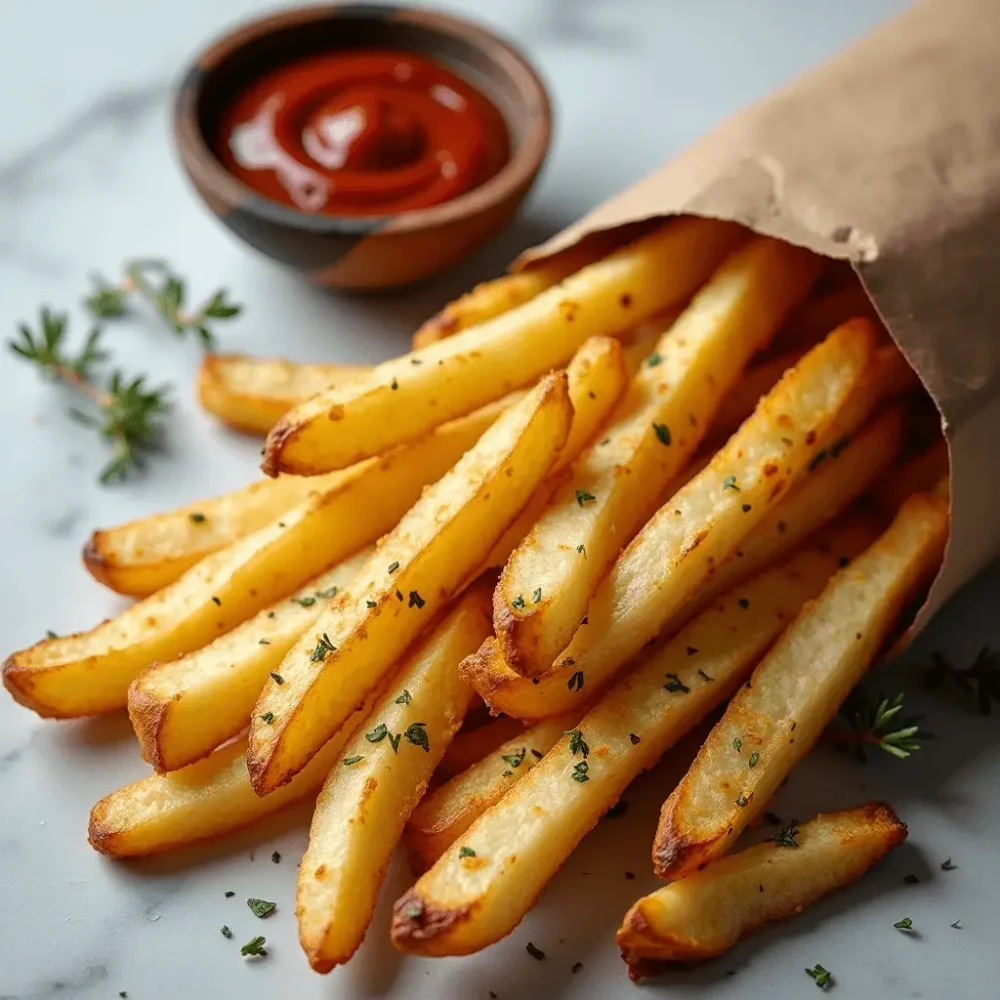
Homemade French Fries (Best Ever!)
Ingredients
- For the Fries:
- 4 large Russet potatoes about 2 lbs / 900g
- Vegetable or peanut oil for frying
- 1 tablespoon white vinegar for soaking water
- Fine sea salt to taste
- Optional Flavorings:
- Garlic powder
- Freshly ground black pepper
- Paprika
- Truffle oil
- Grated Parmesan cheese
- Fresh herbs parsley, rosemary
Instructions
- Step 1: Prepare the Potatoes
- Peel and cut: Peel the potatoes (optional) and cut them into even sticks, about 1/4 to 1/2 inch thick. Uniform size ensures even cooking.
- Soak in cold water: Place the cut potatoes in a large bowl of cold water with 1 tablespoon of white vinegar. Soak for 30 minutes to 2 hours. This removes excess starch and helps achieve crispy fries.
- Dry thoroughly: Drain the potatoes and pat them completely dry with paper towels. This is crucial – any moisture will cause the oil to splatter and result in soggy fries.
- Step 2: First Fry (Blanching)
- Heat the oil: Pour oil into a deep pot or Dutch oven, filling it no more than halfway. Heat to 300°F (150°C).
- First fry: Working in batches, fry the potatoes for 5-7 minutes, until they are cooked through but not browned. The fries should be soft and slightly translucent.
- Drain and rest: Remove the fries with a slotted spoon and drain on paper towels. Let them rest for 10-15 minutes. This allows the fries to cool and the interior to set.
- Step 3: Second Fry (Browning)
- Increase heat: Bring the oil temperature up to 375°F (190°C).
- Second fry: Fry the potatoes in batches for 2-4 minutes, until golden brown and crispy.
- Drain and season: Remove with a slotted spoon, drain on paper towels, and season immediately with fine sea salt.
- Serve: Enjoy immediately while hot and crispy!
Why This Recipe Works
- Double-fry method – Ensures crispy outside, fluffy inside
- Proper soaking – Removes excess starch for maximum crispiness
- Correct potato type – Russet potatoes are the gold standard
- Perfect oil temperature – No soggy or burnt fries
- Simple ingredients – Just potatoes, oil, and salt
Key Benefits of Homemade French Fries
- Crispier than oven-baked versions
- Control over seasoning and oil
- More economical than takeout
- No artificial preservatives
- Customizable thickness
- Perfect for any occasion
Essential Equipment
- A deep fryer, Dutch oven, or large, heavy-bottomed pot
- Kitchen thermometer (crucial for success)
- Spider strainer or slotted spoon
- Large bowl
- Clean kitchen towels or paper towels
Chef Secrets: Tips for Perfect French Fries
| Secret | Why It Works |
|---|---|
| Use Russet potatoes | High starch content = fluffy interior |
| Soak in cold water | Removes surface starch = crispy exterior |
| Add vinegar to soak | Prevents fries from sticking together |
| Dry thoroughly | No moisture = no splatter + crispier fries |
| Double-fry method | First fry cooks inside; second fry crisps outside |
| Don’t overcrowd | Fries need room to crisp; cook in batches |
| Season immediately | Salt sticks best when fries are hot and oily |
| Use a thermometer | Exact temperature is key to perfect fries |
🎯 Choosing the Right Potato
- High-Starch (Idaho/Russet): The best choice for fluffy interiors and crispy exteriors.
- All-Purpose (Yukon Gold): A great alternative, offering a buttery flavor and creamy interior.
- Avoid Waxy Potatoes: Varieties like Red Bliss or New Potatoes are better for salads, as they won’t get as fluffy.
The Keys to Maximum Crispiness
- Dry, Dry, Dry: Any surface moisture will cause the oil to splatter and steam the fries.
- Don’t Overcrowd the Pot: Adding too many fries at once drops the oil temperature drastically, leading to soggy, greasy fries.
- Salt Immediately: Salting while hot allows the salt to adhere to the surface oil.
Lighter Cooking Methods
Oven-Baked “Fries”: Toss dried, oiled fries on a parchment-lined baking sheet. Bake at 425°F (220°C) for 20-30 minutes, flipping halfway.
Air Fryer Fries: Cook at 380°F (195°C) for 12-15 minutes, shaking the basket halfway through. For a healthier twist, you can also try my Air Fryer Sweet Potato Fries – they’re just as crispy and delicious!
Air Fryer vs Oven vs Deep-Fried
| Method | Crispiness | Time | Oil Needed | Best For |
|---|---|---|---|---|
| Deep-Fried | ⭐⭐⭐⭐⭐ | 10-12 min | Yes (3-4 cups) | Ultimate crispy fries |
| Air Fryer | ⭐⭐⭐⭐ | 15-20 min | 1-2 tbsp | Healthier option |
| Oven-Baked | ⭐⭐⭐ | 25-30 min | 2-3 tbsp | No-fry alternative |
Troubleshooting Table
| Problem | Why It Happens | The Fix |
|---|---|---|
| Fries are soggy | Not dried enough or oil too cool | Pat fries VERY dry; heat oil to 375°F |
| Fries are burnt | Oil too hot | Use thermometer; fry at 375°F max |
| Fries are greasy | Overcrowded or oil too cool | Cook in small batches; maintain temperature |
| Fries are limp | Not soaked or insufficient cooking | Soak 30 min minimum; cook thoroughly |
| Fries stick together | Not dried or soaked with vinegar | Dry well; add vinegar to soaking water |
| Uneven cooking | Potatoes cut unevenly | Cut into uniform sticks |
| Oil splatters | Wet fries | Dry thoroughly before frying |
Variations
| Variation | Ingredients to Add |
|---|---|
| Garlic Parmesan Fries | Toss with minced garlic + grated Parmesan |
| Truffle Fries | Drizzle with truffle oil + Parmesan + parsley |
| Spicy Fries | Add chili powder + cayenne + smoked paprika |
| Herbed Fries | Toss with fresh rosemary + garlic + sea salt |
| Loaded Fries | Top with cheese sauce, bacon, green onions |
| Sweet Potato Fries | Use sweet potatoes instead (cook slightly shorter) |
If you’re feeling adventurous, these Spicy Sweet Potato Fries with Cilantro Lime Dip are a fantastic twist on the classic!
Storage & Reheating
| Method | Duration | Tips |
|---|---|---|
| Refrigerator | 2-3 days | Store in airtight container |
| Freezer | Up to 2 months | Freeze in single layer, then transfer to bag |
| Reheating (Oven) | 5-7 min | Reheat at 425°F (220°C) until crisp |
| Reheating (Air Fryer) | 3-5 min | Reheat at 375°F (190°C) |
Pro Tip: For frozen fries, fry directly from frozen – do not thaw!
Serving Suggestions
Classic Dipping Sauces
- Ketchup
- Mayonnaise
- Garlic Aioli
- Ranch Dressing
- Homemade BBQ Sauce – This smoky, tangy sauce is the perfect companion for your fries!
- Cheese Sauce
Perfect Pairings
- One-Pan Lemon Herb Chicken – A light, zesty main that pairs beautifully with crispy fries.
- Korean Ground Beef Bowl – A flavorful, satisfying meal that’s even better with a side of golden fries.
- Authentic Chimichurri Recipe – Use this vibrant sauce as a dip or drizzle over your fries for an herby kick!
- Watermelon Feta Salad – A refreshing summer side to balance the richness of fried food.
- Creamy Tuscan Salmon – For a more elegant dinner, serve your fries alongside this rich, creamy salmon dish.
Frequently Asked Questions (FAQ)
Why are my homemade French fries soggy?
The most common reasons are not drying the potatoes thoroughly before frying, overcrowding the pot, or the oil temperature being too low.
Can I make these fries ahead of time?
Absolutely! Complete the first fry (blanching) and let the fries cool. You can hold them at room temperature for a few hours or refrigerate them. Finish with the second fry just before serving.
What is the best oil for frying French fries?
Oils with a high smoke point and neutral flavor are best. Peanut oil is the classic choice, followed by canola and vegetable oil.
Why do you soak the potatoes?
Soaking removes excess starch, resulting in crispier fries. The cold water also helps maintain the structure of the potatoes.
Can I reuse the frying oil?
Yes, strain cooled oil through a fine-mesh strainer and store in a cool, dark place. Reuse 3-4 times maximum.
Why double fry?
The first fry cooks the interior while the second fry creates the crispy exterior. This method ensures perfect texture.
Can I freeze homemade fries?
Yes, freeze after the first fry. Complete the second fry directly from frozen state.
What’s the best oil for frying?
Vegetable, canola, or peanut oil work best due to their high smoke points and neutral flavors.
How do I know when the oil is hot enough?
Use a thermometer or test with a cube of bread – it should turn golden in 60 seconds at 350°F.
Can I make these in an air fryer?
Yes, but texture will differ. Spray with oil and cook at 380°F for 12-15 minutes, shaking halfway.
Conclusion
Making perfect homemade french fries is an art that combines proper technique, timing, and attention to detail. While it may take some practice to achieve restaurant-quality results, the satisfaction of creating crispy, golden fries at home is well worth the effort.
Remember that success lies in following the key steps: proper cutting, thorough drying, and maintaining correct oil temperatures. Don’t skip the soaking step, and always season while hot for the best flavor absorption.
Conclusion
Making perfect homemade french fries is an art that combines proper technique, timing, and attention to detail. While it may take some practice to achieve restaurant-quality results, the satisfaction of creating crispy, golden fries at home is well worth the effort.
Remember that success lies in following the key steps: proper cutting, thorough drying, and maintaining correct oil temperatures. Don’t skip the soaking step, and always season while hot for the best flavor absorption.
🍽️ Loved This Recipe? Here’s How You Can Help!
📸 SHOW US YOUR FRIES!
Tag @TastyDinnerRecipes on Instagram – we might feature you!
📌 SAVE FOR LATER
Pin this recipe to your ‘Favorites’ board ↓
✉️ GET WEEKLY RECIPES
Subscribe for free
💬 LEAVE A COMMENT
What’s your favorite way to enjoy french fries? Tell us below! 🍟


Comments are closed.